← All work
Motorhome retail & market intelligenceCase study

Derbyshire Motorhomes

Stock that moves with the market.

Automated market monitoring and AI-assisted analysis inform vehicle sourcing, helping Derbyshire Motorhomes align its stock with current demand. The business reports faster stock turnover and more customers buying vehicles.

AI-assisted analysisMarket intelligenceData engineeringBespoke softwareVehicle sourcing
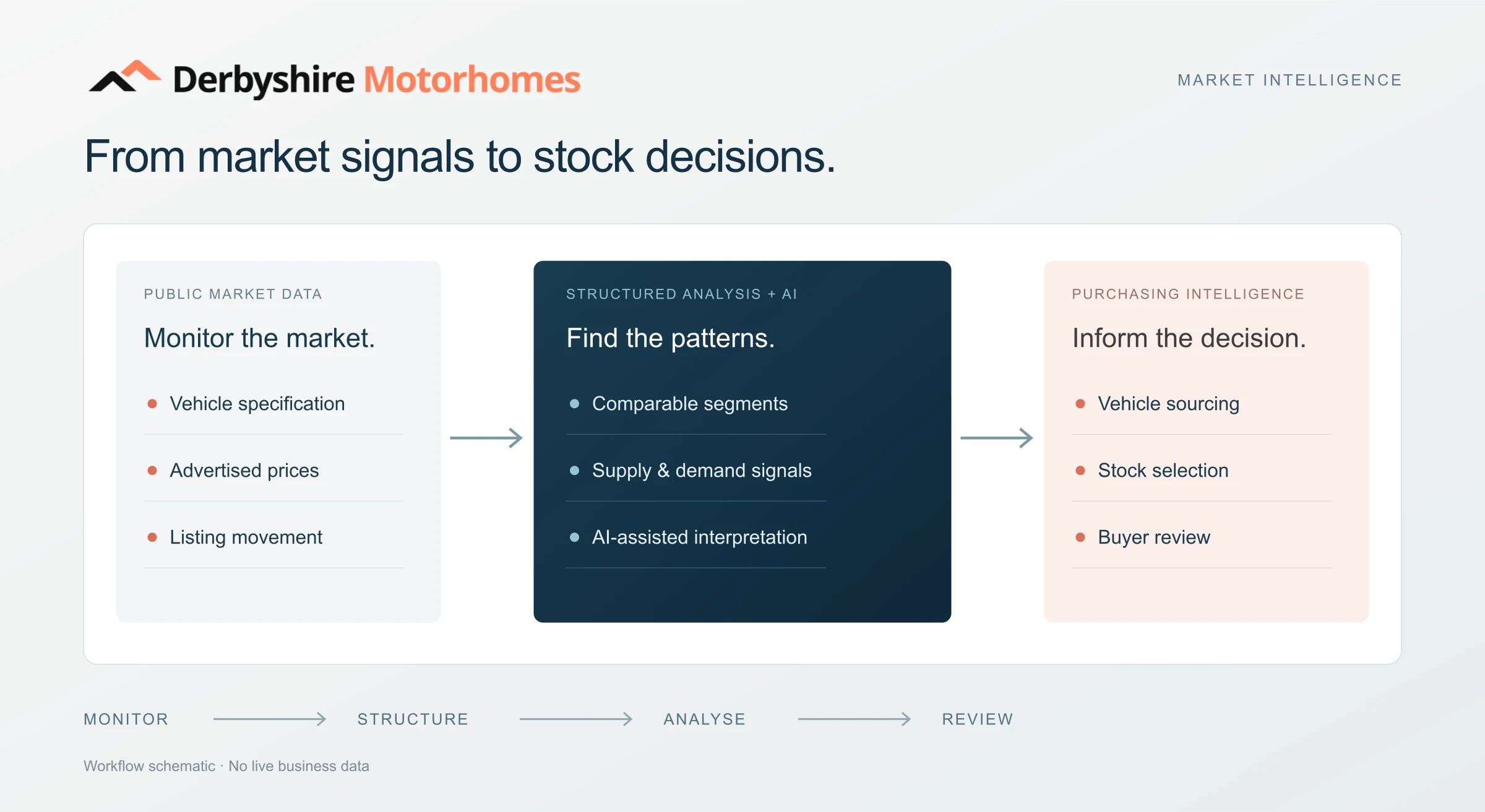
Derbyshire Motorhomes market-intelligence workflow, connecting public vehicle listings, structured analysis and AI-assisted interpretation with vehicle sourcing and buyer review.
Schematic of the market-intelligence workflow, using Derbyshire Motorhomes' public branding. No live market data, purchasing criteria or customer records are shown.

01 / The challenge

Understanding what
needed to change.

For a motorhome retailer, the stock list is a significant commercial commitment. Each vehicle represents capital, space and preparation work, while customer preferences continue to change. Purchasing decisions need to reflect what buyers are looking for now, as well as the team's experience of what has sold before.

Publicly advertised vehicles offer a substantial source of market evidence. Specifications, asking prices and listing activity can reveal useful patterns, but the information is spread across websites and changes over time. Manually checking individual listings gives a partial view and makes it difficult to distinguish an emerging pattern from an isolated example.

For Derbyshire Motorhomes, the opportunity was to make that evidence useful to the people deciding what to source. The aim was a stock list that could evolve with the market, supported by structured observations and analysis rather than waiting for a shift in demand to become apparent through the business's own stock performance.

02 / The solution

Bring market evidence into the next buying decision.

The programme connected automated collection of publicly available motorhome data with structured historical analysis and AI-assisted interpretation. The staff app made that intelligence available in the context of the sourcing decisions it was intended to support.

The data foundation brings vehicle listings into a comparable structure. Attributes such as make, model, age, layout, capacity and advertised price help separate meaningful market segments. Retained observations add the dimension a single search cannot provide: how asking prices, availability and listing activity change over time.

Analysis then examines combinations of characteristics, supply and movement to identify demand signals relevant to purchasing. AI-assisted analysis supports interpretation of those patterns, helping turn a large body of market information into evidence the business can consider when choosing its next vehicles.

The decision remains with the buyer. Staff can weigh market signals alongside their knowledge of a vehicle, its condition and its commercial suitability. The software supports that judgement by making wider market evidence part of the working process.

03 / What was delivered

01

Automated public market monitoring

Bespoke collection processes bring together publicly advertised vehicle information from multiple sources. Repeated observations create a basis for monitoring market activity at scale, extending the view beyond individual manual searches.

02

Comparable vehicle data

Vehicle specifications and advertised prices are normalised into a structured dataset. Consistent attributes support more relevant comparisons between vehicles and segments, with missing or uncertain information retained as a data-quality consideration.

03

Historical market evidence

Listing observations, advertised-price changes and lifecycle movements are retained over time. That history supports analysis of how the monitored market is changing, rather than relying solely on the latest snapshot of advertised stock.

04

Market trends and AI-assisted analysis

Structured analysis examines vehicle characteristics, supply, pricing and movement signals. AI-assisted interpretation helps the business explore patterns within that evidence and consider their relevance to vehicle sourcing.

05

Purchasing intelligence in the staff app

The staff workspace brings market information closer to the people making buying decisions. Segment and regional comparisons support questions about stock selection and market positioning, with evidence available to inform the next sourcing decision.

06

Evidence and decision support

Source observations, data coverage and the strength of supporting evidence matter to the analysis. The workflow supports informed buyer review, keeping market signals distinct from a guaranteed prediction or an instruction to purchase.

04 / The outcome

A more connected
way forward.

Derbyshire Motorhomes uses the market intelligence to inform vehicle sourcing and adapt its stock selection as demand changes. The commercial benefit is a stock list that responds to current market patterns, giving customers a more relevant selection of vehicles.

The business reports faster stock turnover and more customers buying vehicles. It attributes these outcomes to purchasing decisions that align the available stock more closely with current buying patterns. These are qualitative business-reported outcomes; no percentage uplift or private operating figures are published.

The case demonstrates a practical use of AI-assisted analysis within a wider data and software programme. Automated monitoring supplies the evidence, structured analysis makes it comparable, and interpretation connects the patterns with a commercial decision: what the business should consider buying next.

About the project

Delivery scope, AI use and the reported improvements in stock turnover and customer purchases are confirmed by the business. No quantified improvement or reporting period has been supplied. Public listing activity provides market signals, including inferences; it is not a complete record of individual buying behaviour or verified transaction prices.

05 / Wider significance

From market signals to sourcing questions

The value of market analysis lies in the decisions it helps people examine. Comparing relevant vehicle segments gives the buying team a more useful starting point than treating every advertised motorhome as part of one undifferentiated market.

Market evidenceSourcing question it can support
Vehicle specifications and layoutsWhich combinations of characteristics are relevant to the demand being observed?
Advertised prices and price changesHow are comparable vehicles positioned, and where is pricing being adjusted?
Listing duration and stock movementWhich segments show stronger or weaker movement within the monitored data?
Regional supply and activityHow does the observed picture vary across locations?

These questions support a stock list that can develop alongside the market. They provide context for buyer judgement rather than replacing the inspection and commercial assessment of an individual vehicle.

06 / Wider significance

A data foundation that supports useful analysis

Market intelligence depends on the quality and meaning of its inputs. Different listing formats, incomplete specifications and changing availability can all affect a comparison. Standardising attributes and retaining observation history makes it possible to examine those differences rather than hide them.

The distinction between an advertised signal and a completed transaction is particularly important. An asking price is not the final price paid, and a listing disappearing can have more than one explanation. The analysis therefore uses public stock activity as evidence of market patterns, with uncertainty forming part of its interpretation.

That foundation gives AI-assisted analysis a defined commercial context. Its purpose is to help interpret relevant market evidence and support sourcing decisions, while the people responsible for buying retain the final judgement.

References

Sources & context.

  1. Derbyshire Motorhomes: official business and vehicle offering

More perspectives on change

Explore more work.

All work
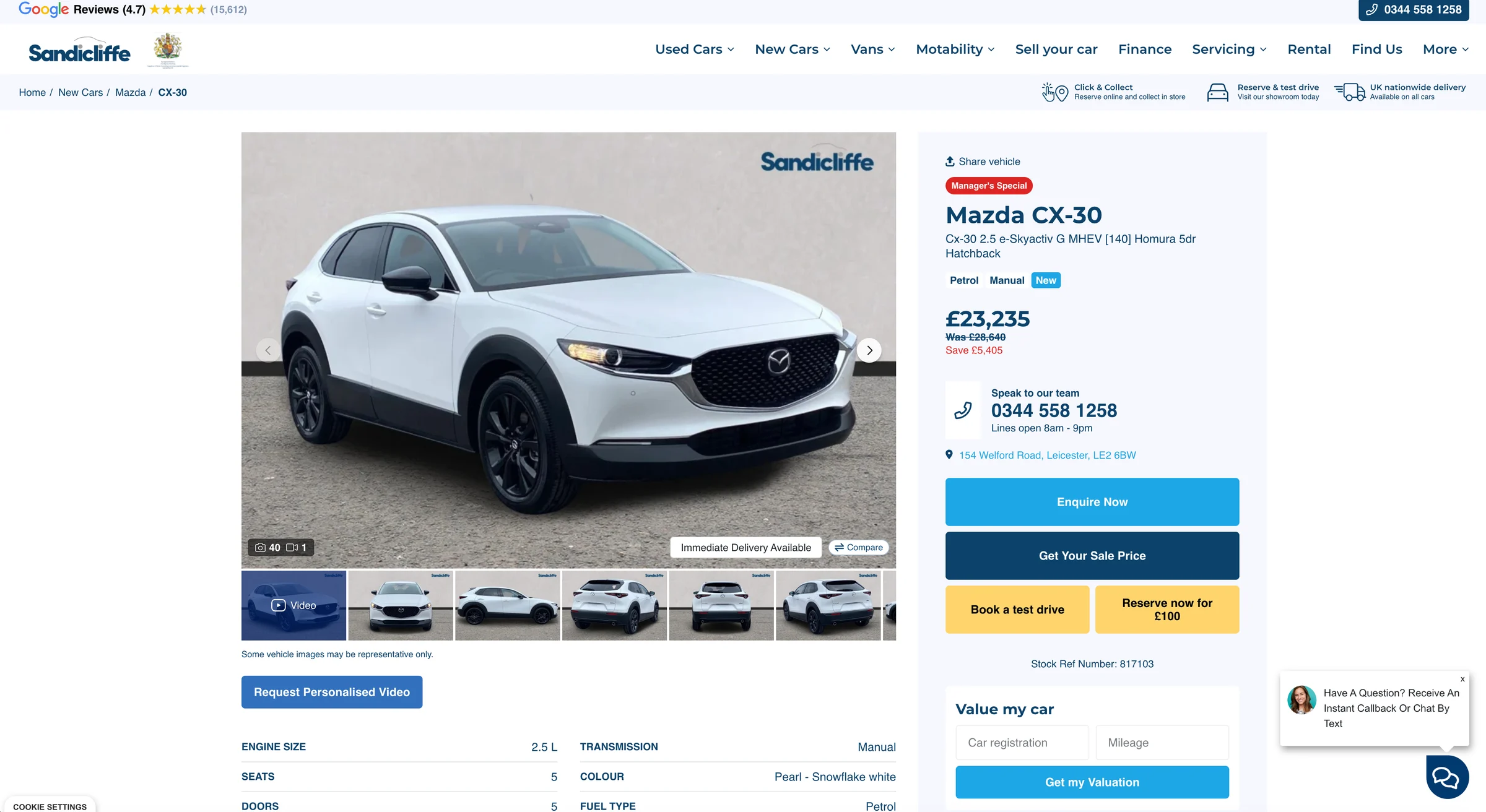
Sandicliffe vehicle-detail page with a large vehicle gallery on the left and a separate pricing, enquiry, test-drive and reservation panel on the right.
Automotive retailCase study

Sandicliffe

Transforming the automotive buying journey.

Digital transformationUX strategyCustomer experience
+162%reported increase in goal conversionsReported result
Explore the case study
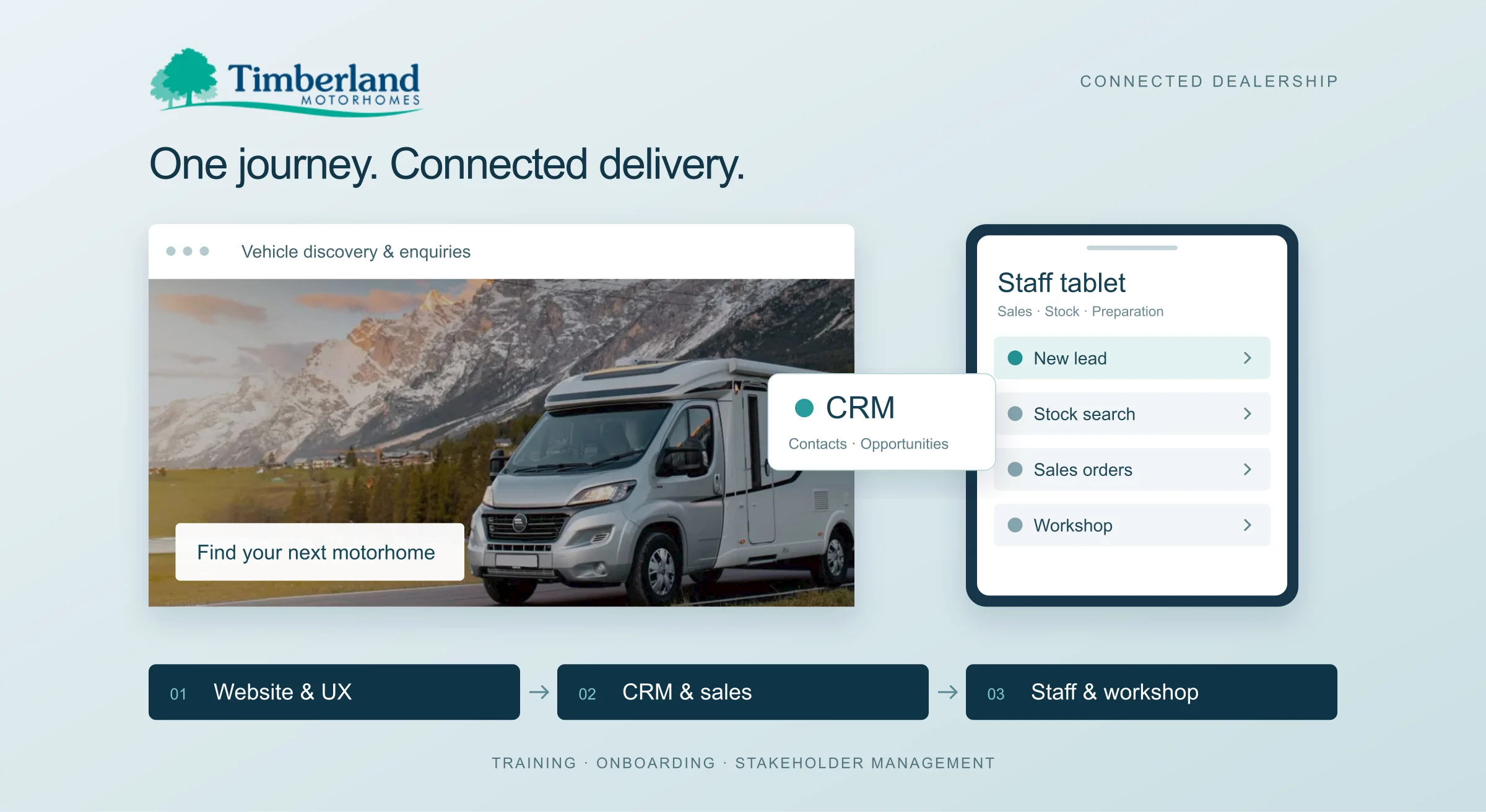
Timberland Motorhomes platform overview connecting the customer website, CRM contacts and opportunities, and a staff workspace for sales and workshop operations.
Motorhome retail & dealership operationsCase study

Timberland Motorhomes

A connected dealership, from discovery to handover.

Digital transformationWebsite & UXCRM integrationBespoke softwareChange management
+350%approximate increase in lead captureReported result
Explore the case study

Your next chapter

What could your
business do better?

Tell us where you want to go, what’s getting in the way, or what you need to deliver. We’ll start there.

Start a conversation

Start a conversation

Tell us what
you have in mind.

Interactive preview. Your information stays in this page and is not sent.